
Loss seen during peak pollen season at the sites studied.
Service 01
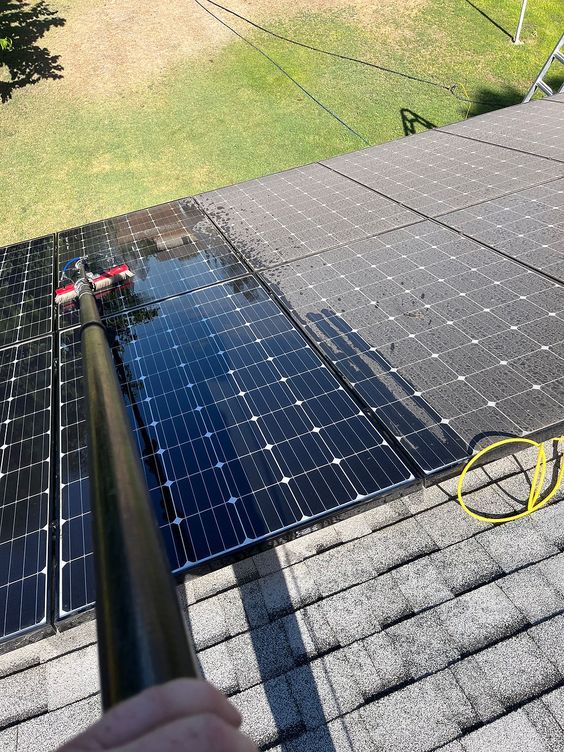
Solar Panel Cleaning
Keep the panels clear and working as efficiently as possible.
Planning range$175–$650+
Final pricing is confirmed after reviewing the panels, access, and condition.
Why it matters
Solar panels work best when sunlight can reach the glass clearly.
Dust, pollen, bird residue, and mineral buildup can block some of that light. Rain can remove loose dirt, but it does not always remove buildup that has stuck to the glass.
At a glance
Useful numbers, kept in context.
Increase measured after the panels were cleaned at those same sites.
Study results are not a guarantee. The benefit depends on how much dirt is actually blocking the glass.
How we clean
Purpose in
every step.
Inspect
We check the panels, roof access, visible damage, and the type of buildup before cleaning begins.
That tells us the safest way to clean the system before anything touches the glass.
Clean
Soft, non-abrasive tools and controlled water remove dust, pollen, bird residue, and surface buildup without aggressive pressure.
High pressure can damage solar panels, so we avoid aggressive pressure.
Rinse
We rinse away loosened dirt and cleaning residue, then check the glass again before leaving.
When it makes sense, we use deionized water to reduce mineral spotting during the final rinse.
A cleaner rinse
DI water.
DI water is water with most dissolved mineral ions removed.
Those minerals are what can stay behind as water spots after ordinary tap water dries.
Deionized water is useful for final rinsing because it leaves far less mineral residue behind as it dries.
What we handle
01
Panel glass and accessible frame edges
02
Dust and pollen buildup
03
Bird residue
04
Mineral spotting where safely removable
05
Residential and light-commercial solar systems
06
One-time and recurring cleaning
Frequently asked questions
A few things
worth knowing.
01How often should solar panels be cleaned?+
A simple rule is to check them every 3–4 months. Clean them when you can see dust, pollen, bird residue, or other buildup. Some homes may only need one or two cleanings a year, while dusty or bird-heavy areas may need more.
02Do you pressure wash solar panels?+
No aggressive pressure. We use controlled water and soft, non-abrasive tools. We avoid aggressive pressure because it can damage solar panels.
03What is DI water?+
DI means deionized. It is water with most dissolved minerals removed, so it leaves less mineral residue behind as it dries.
04Can you remove hard-water spots?+
Often, yes. If the minerals have already etched the glass, cleaning may not remove every mark. We check the surface before using a stronger treatment.
05Do you need access to our water?+
Sometimes. We confirm water access before the appointment so there are no surprises.
Southern California. Elsewhere in California by request; travel fee applies.
Request care ↗